
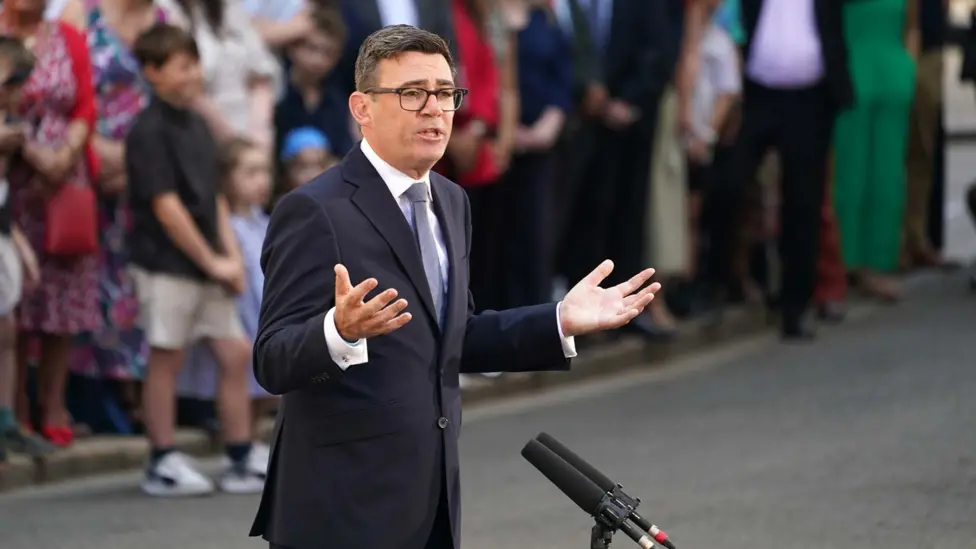
Andy Burnham has begun his premiership with a pledge to restore public confidence in politics, end rough sleeping and deliver a major programme of economic and social reform after replacing Sir Keir Starmer as UK prime minister.
The former Mayor of Greater Manchester became Labour leader last week following Starmer’s departure and is now the UK’s fourth prime minister in five years and seventh since 2016.
Speaking outside 10 Downing Street in his first address as prime minister, Burnham acknowledged growing public frustration with politics and admitted that governments had failed to deliver the level of change people expected.
“People at home are fed up with politics. I hear you, and I want to be honest with you. We have not been good enough, and we need to be better,” he said.
Burnham promised a new era of national unity and said his government would work to “bring back hope” by addressing immediate pressures while pursuing long-term reforms.
Cost of living and housing priorities
The new prime minister identified rough sleeping and the cost of living crisis as his immediate priorities.
He pledged to “end rough sleeping in our country”, with Downing Street announcing an additional £340 million investment over five years from within the existing housing department budget.
Burnham also promised measures to provide “breathing space” for households, including expected action on energy bills and bus fares as part of a fully funded cost-of-living package.
A new 10-year plan for Britain, expected later this year, will focus on rebuilding the economy, expanding council housing and placing essential services under greater public control.
New cabinet and economic direction
Burnham appointed John Healey as chancellor in a major cabinet reshuffle, replacing Rachel Reeves. Healey, a former defence secretary, is widely regarded as a steady figure and was seen as a compromise choice for the role.
Ed Miliband has been appointed foreign secretary, while Shabana Mahmood remains as home secretary.
Louise Haigh, one of Burnham’s closest allies, becomes first secretary of state and chancellor of the Duchy of Lancaster, leading a strengthened Cabinet Office described as the “political engine room” of the new government.
Burnham said his administration would pursue the biggest changes to Britain’s political and economic model in decades, describing his approach as a “circuit breaker” after years of instability.
Fiscal caution amid investment plans
The prime minister said he would explore “any flexibility” within existing fiscal rules to increase investment in infrastructure but insisted that he would maintain a “very prudent” approach to public finances.
His comments initially unsettled financial markets, with UK 10-year gilt prices falling amid concerns over increased borrowing. However, markets stabilised following Healey’s appointment as chancellor.
Burnham said his government would continue to honour defence spending commitments while maintaining control over national debt and public spending.
International engagement begins
In his first calls with world leaders, Burnham spoke with US President Donald Trump, Ukrainian President Volodymyr Zelenskyy and European Commission President Ursula von der Leyen.
He invited Trump to Manchester for next year’s G20 summit, despite previous comments from Trump referring dismissively to Burnham as the mayor of “some town”.
A new chapter for Labour
Burnham’s arrival at Downing Street follows a dramatic leadership change within Labour, after MPs removed Starmer from office.
The new prime minister said his government’s mission would be to rebuild trust, improve public services and create a stronger sense of national purpose.
“This is the moment when Britain starts to believe again,” Burnham said, promising a new direction for the country after years of political uncertainty.